
Our story · Dennis Falkner
Snaggit.
My own
Fuck-up Story.
And why giving up was never an option.
Snaggit did not begin in a stylish startup office. There was no perfect business plan, no ready-made development team and certainly no master plan for the next five years. It started with a call from my mother. And with an answer from me that, looking back, sums up just how naïve I was about the whole thing:
“We’ll just quickly build you an app.”
It wasn’t quick.
But let’s start at the beginning.
2021
“Dennis, we have a problem…”
My mother called me in early 2021. She was running two school canteens in Aachen at the time and had a very specific problem:
“Dennis, how can I take orders without queues and without direct contact with customers?” My answer came pretty quickly. We’ll build you an app. One small problem:
At that point, I knew how to build websites. My knowledge of professional app development was nowhere near what you should have before saying something like that. So the first version of Snaggit was simply a web app. And you know what?
It worked. The pupils used it. Things got easier. Orders could be prepared in advance. And suddenly, neighbouring canteens started coming to us looking for exactly that kind of solution. What had been a small solution for my mother suddenly became an idea.
Perhaps even a business idea.
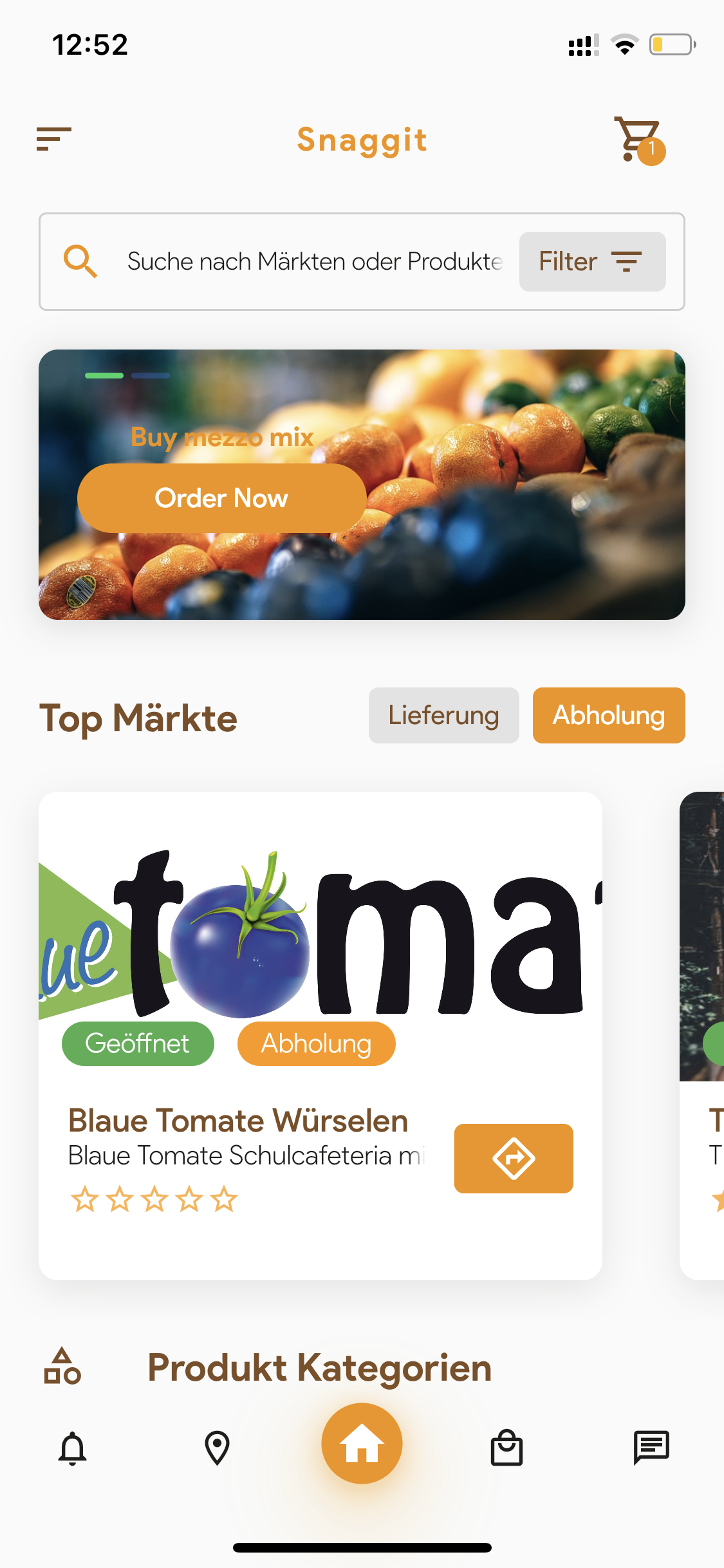
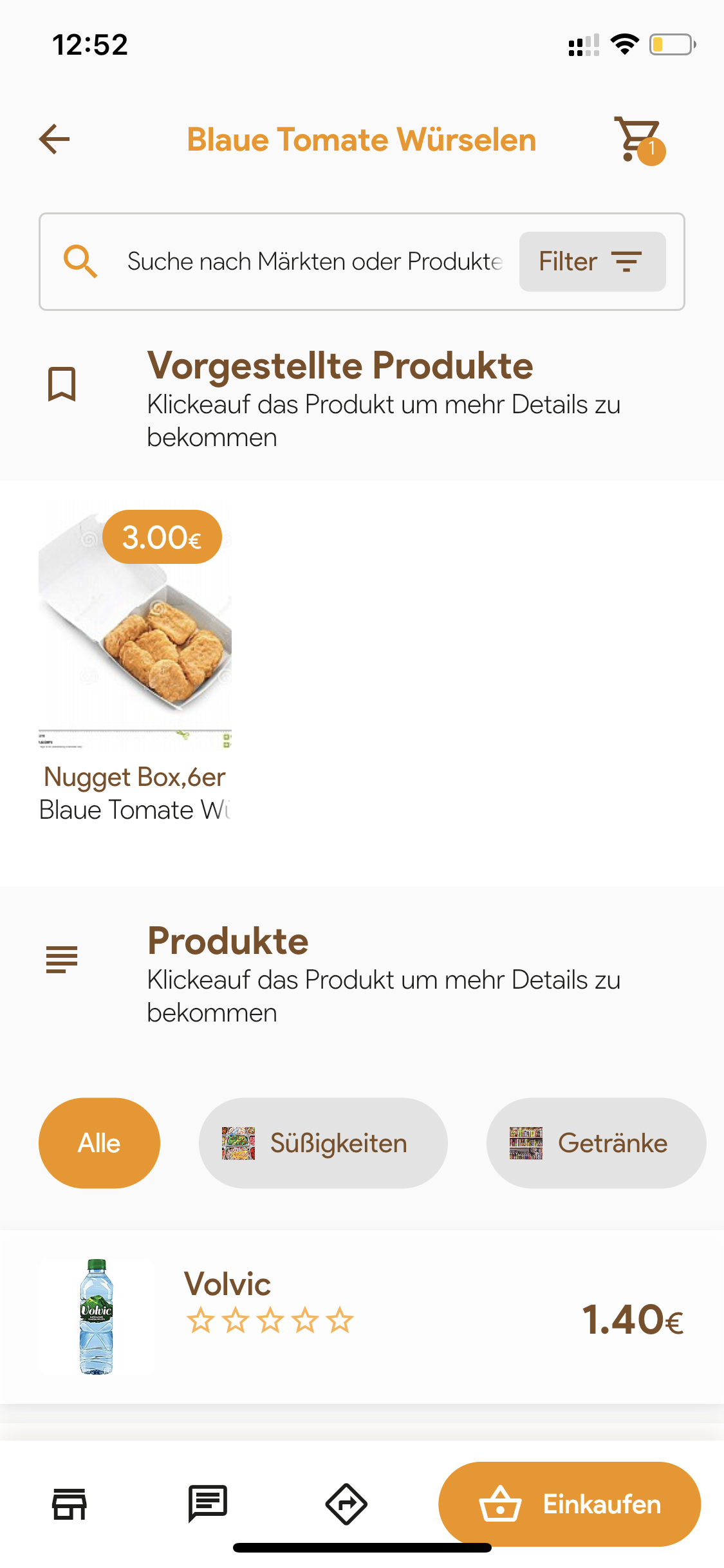
Let’s just set up a company, then.
What do you do when you have just built your first little web app and other businesses suddenly start showing interest? Apparently, you set up a GmbH, a German limited liability company. At least, that was our conclusion.
Falkner GmbH was founded in 2021. Now all we really needed was a name for our app. Snack-it became Snackit. And eventually:
Snaggit.
Why? Because that is roughly how we would pronounce an English word around here. No months of brand strategy. No huge workshop.
Snaggit. That works. Moving on.
That approach would come back to bite us more than once.
“How hard can it be?”
It became clear to me fairly quickly:
If we wanted to turn our web app into a real product, we needed professional help. We needed a developer. We soon found someone through a classifieds site. A young guy who seemed competent. Perfect. Or so I thought. As things grew more complex, it became clear that the project was bigger than we had expected. More developers joined.
Suddenly, we had a frontend team. Then we needed a backend team. Then came payments. Servers. GDPR. BaFin, Germany’s financial regulator. Integrations. TestFlight. Databases. And a whole lot of things that, at the start, I did not even know I did not know.
What began as:
“We’ll quickly build you an app.” had well and truly become a software project.
My design career was pretty short, too.
Before hiring a professional designer, I had of course already tried my hand at what Snaggit could look like. Well. I’ll let the result speak for itself.
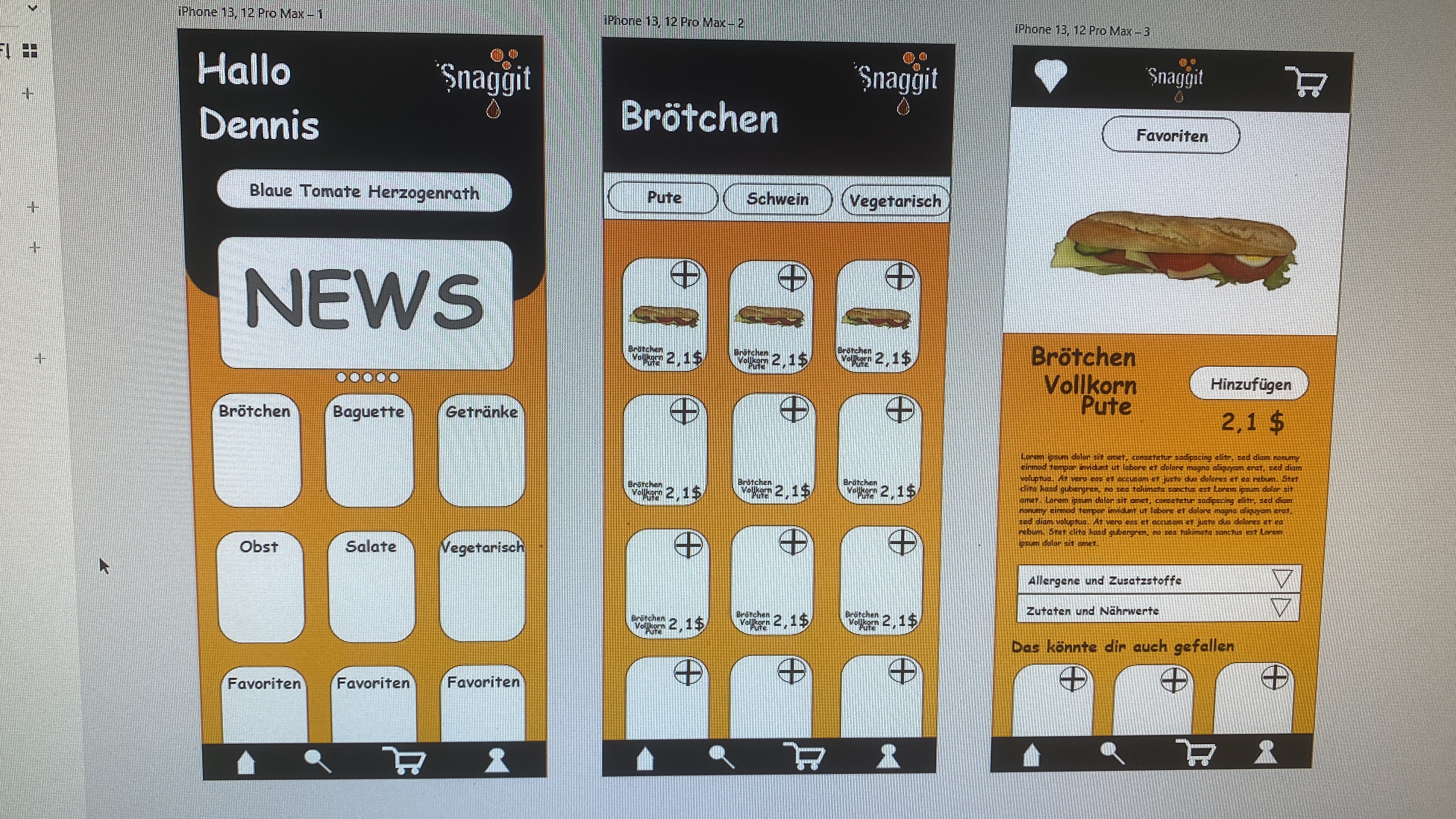
At some point, as an entrepreneur, you have to recognise your strengths and weaknesses. My UI/UX skills at the time were very clearly in the second category. So I brought in professional help. And that was one of the decisions that really worked.
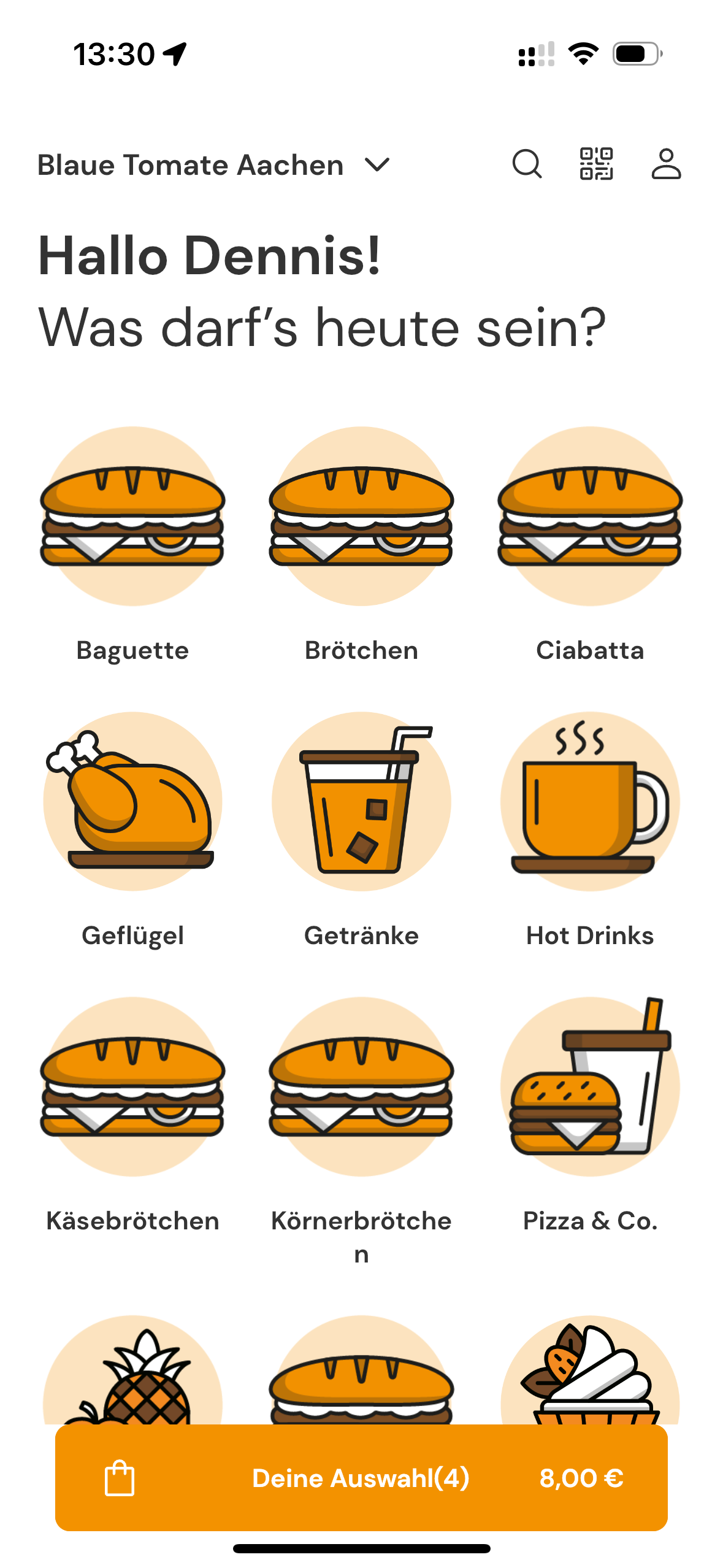
Suddenly, Snaggit looked like Snaggit.
The new design was exactly what I had imagined. I had just clearly been unable to make it look that way myself. For the first time, Snaggit had a proper visual identity. And many elements of those designs are still part of our app today.
So now we had:
An idea. Real users. Developers. A backend team. A professional design.
What could possibly go wrong now?
...
Quite a lot.
BUGFEST.
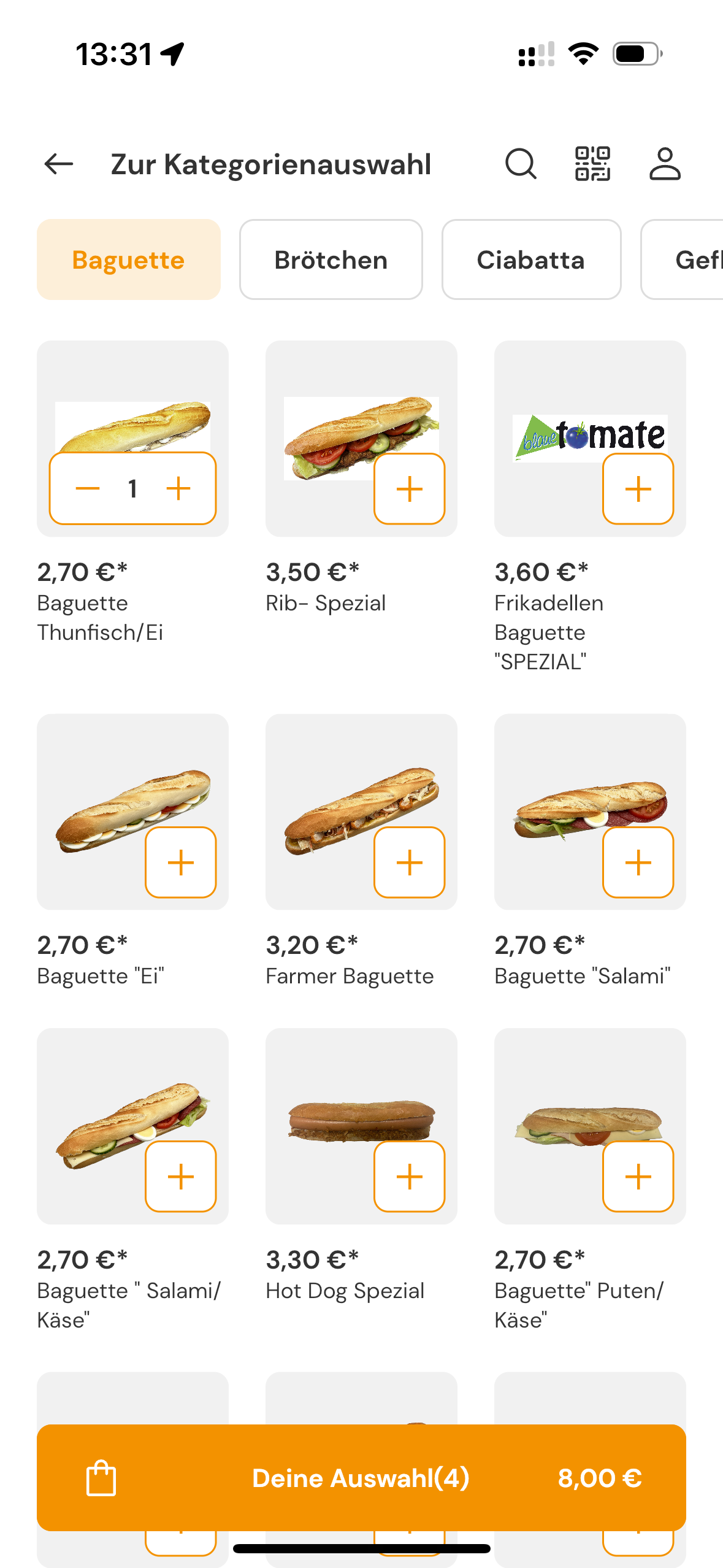
The app was now running through TestFlight in our own canteen. Not in a PowerPoint. Not as some startup mock-up. But in a real business. Real products. Real orders. Real customers. And unfortunately:
real bugs. When our makeshift backend met the actual backend, a period began for which I still have no better word:
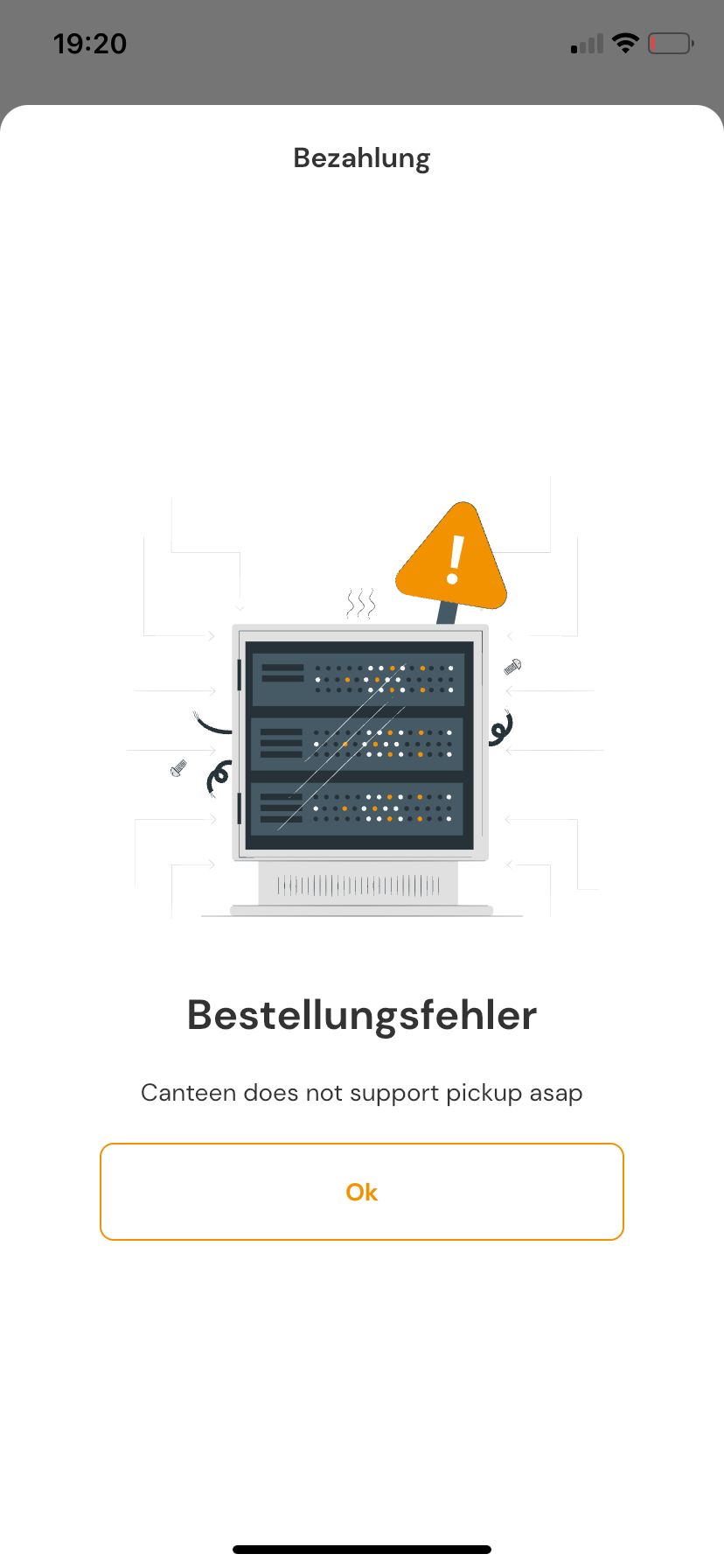
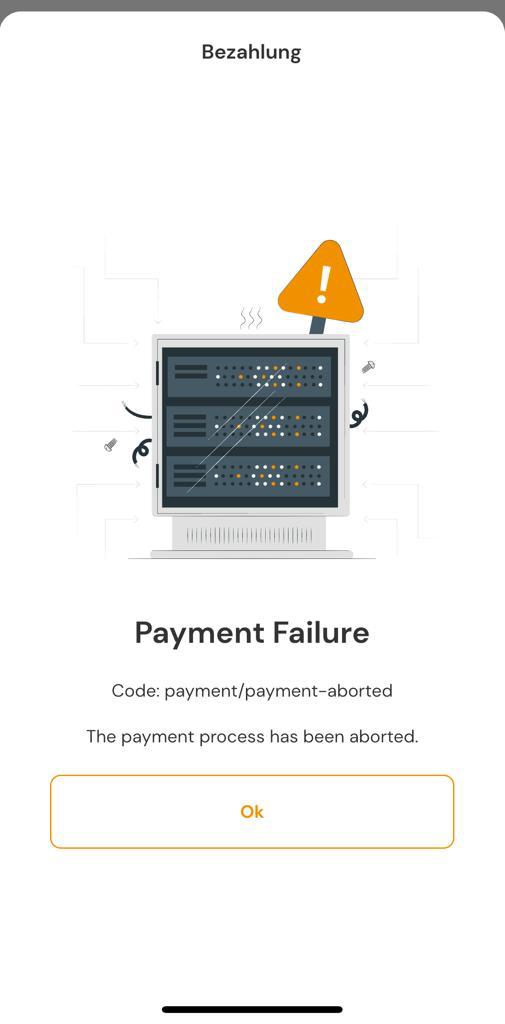
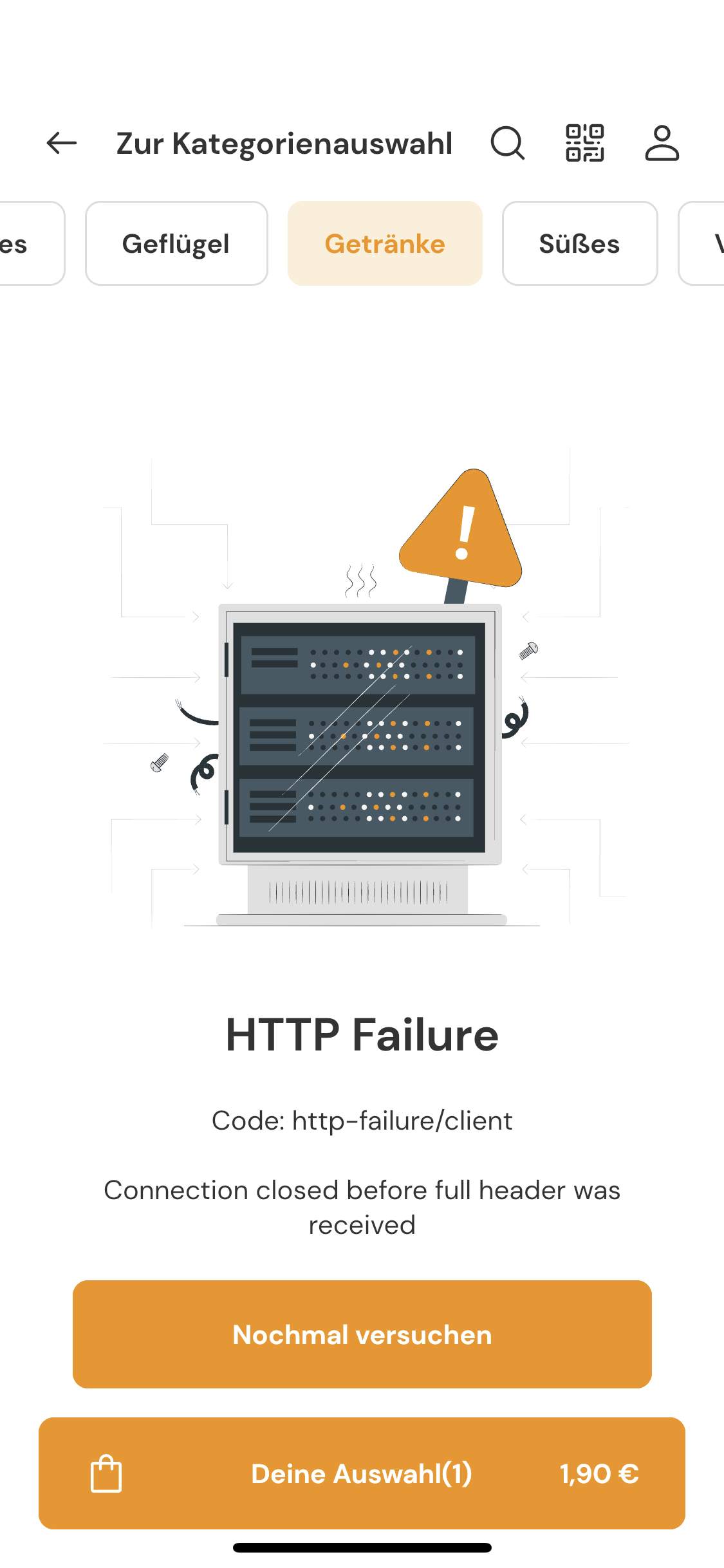
Bugfest. Order errors. Payment Failure. HTTP Failure. Fix a bug. Find another one. Fix that one. Discover that something else has now stopped working somewhere else. And start again. By the way, I have grown to hate the word “bug” a little.
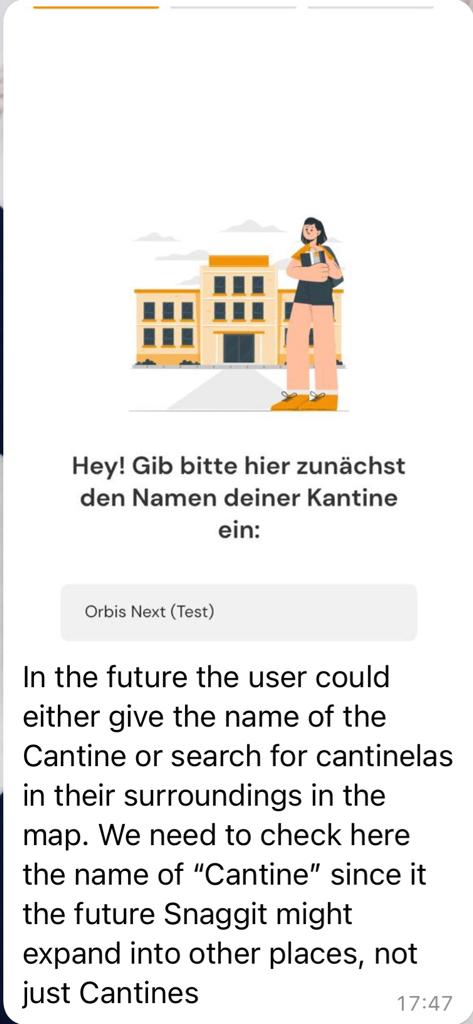
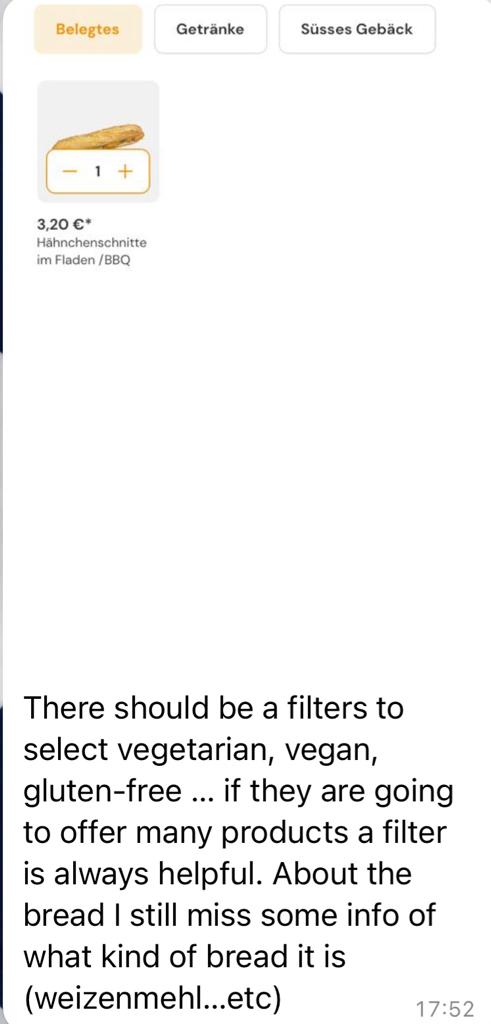
But in between all those bugs, something important happened.
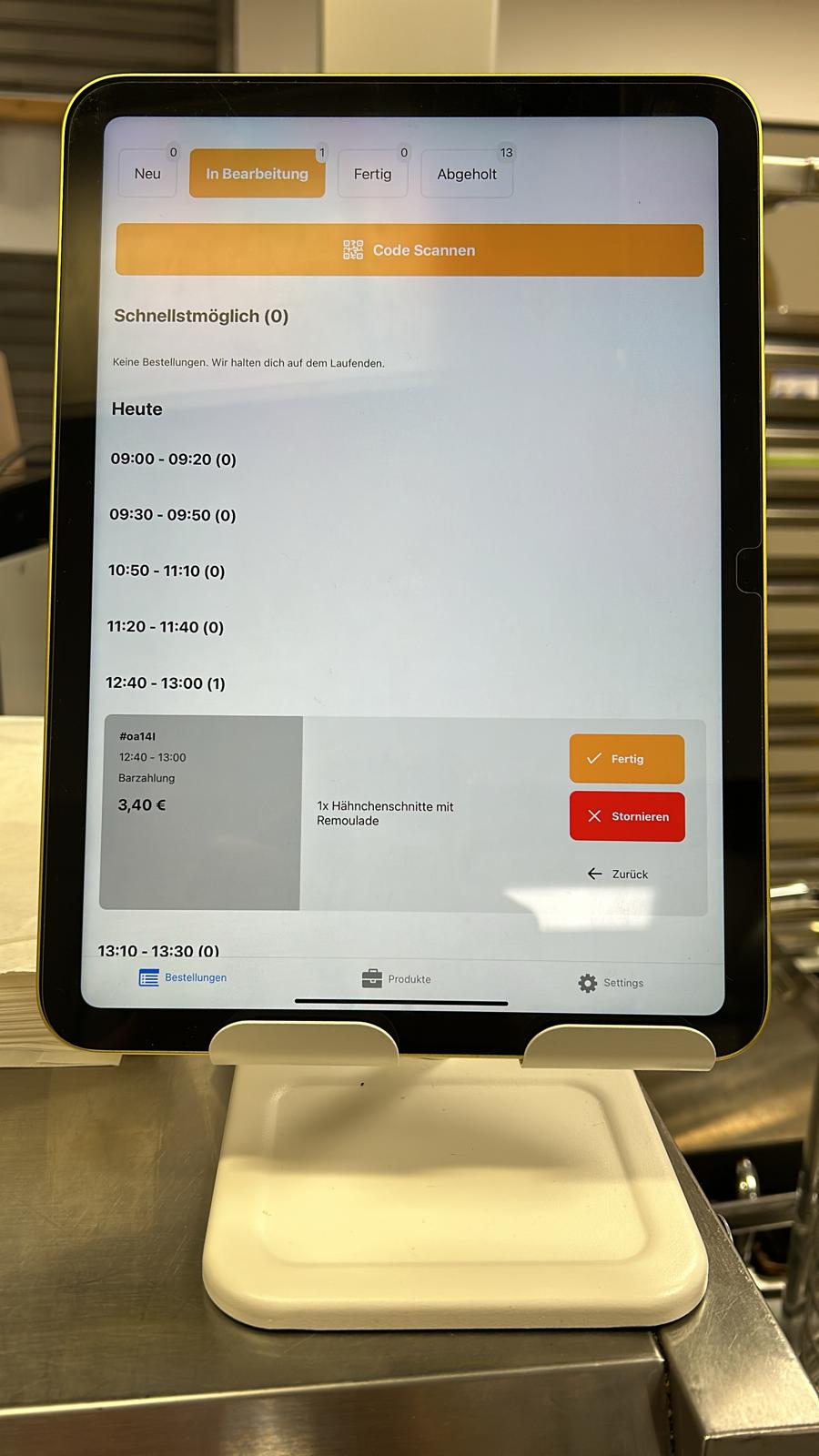
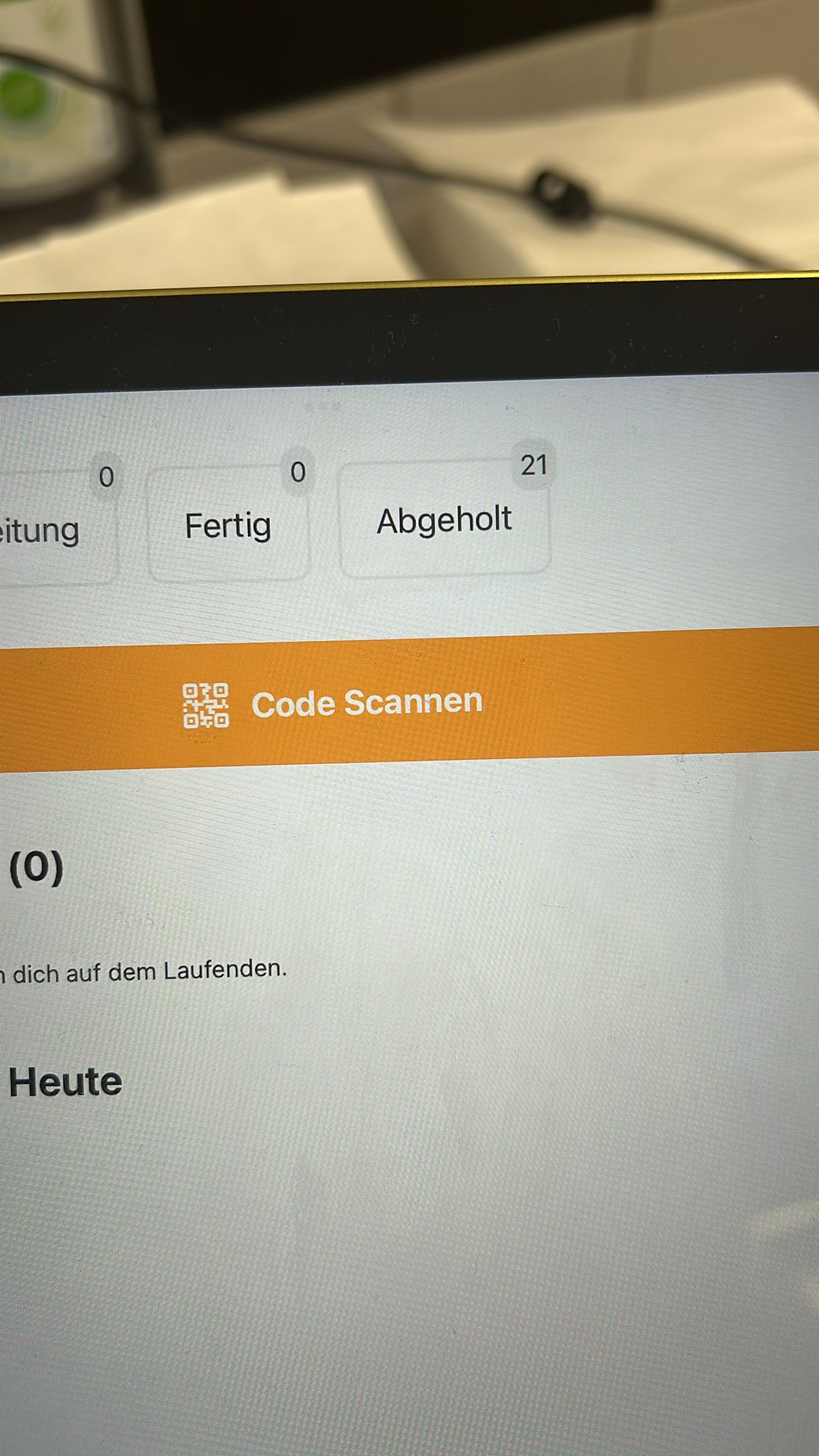
People were using Snaggit.
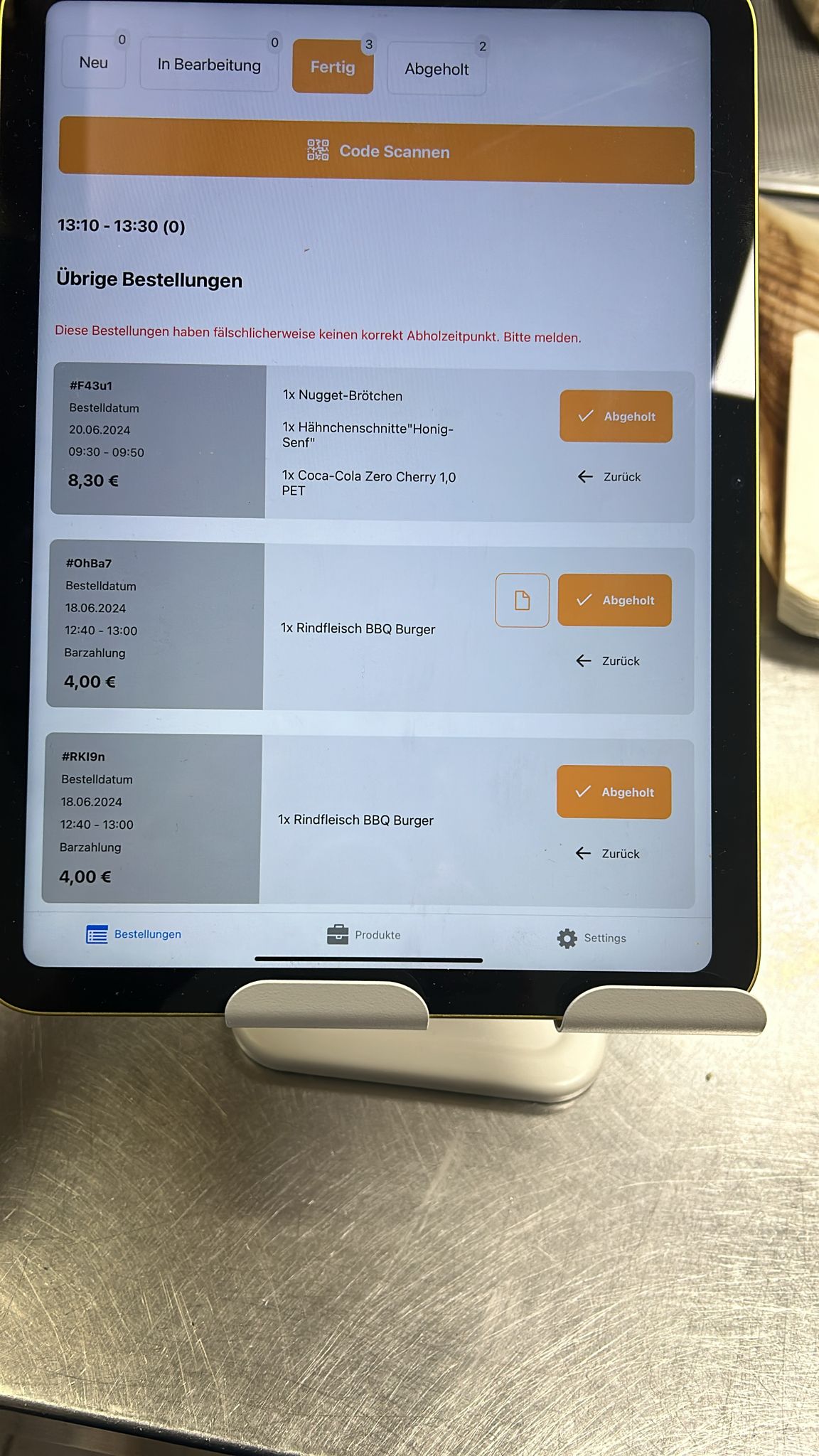
There was a tablet right in the middle of our canteen. Orders came in. Products were prepared. Customers collected their orders. Snaggit was far from perfect. But the idea worked in real life. And that is exactly why I could not just write the project off.
And then they were gone.
At some point, the software was no longer the only problem. The frontend team quit. Shortly afterwards, the backend team left too. Suddenly, there I was. And it felt as though I was right back at the beginning. By that point, the project had already cost me around
€50,000
in total.
Not counting my own time.
That is something you have to face up to. So much money. So much time. So many conversations. So many evenings. And still no product I could point to and say:
Now it works.
But I was not starting from zero.
It took me a while to understand that myself. Because by then I had something I had not had in 2021.
I had knowledge.
I had understood what our customers actually needed.
I had a professional design.
I had real users.
I had customers in the app.
And I had people waiting for Snaggit to finally work properly.
Above all, I had learnt pretty clearly how not to do it. And that is knowledge too. Very expensive knowledge. But knowledge all the same.
Give up?
Of course, there comes a moment when you ask yourself:
Why am I putting myself through this? In business, sometimes everything hits at once. The money is gone. Your trust in people is gone. Things you believed in suddenly stop working. And yet there was one thought I never wanted to accept:
I give up. Perhaps it was conviction. Perhaps sometimes a little stubbornness too. Probably both. But I knew one thing:
I can do this under my own steam.
If the path so far is not working, I will just have to find another one.
2024
Then came Falko.
In March 2024, my phone rang on my birthday. On the other end:
Falko Müller. A former colleague. Incredibly precise. Methodical. To me, the very definition of a model civil servant. So, pretty much the opposite of my:
“Come on, let’s just do it.” And that is exactly why I thought:
That is the kind of person you need on the team. Somehow, with enough creative understatement, I managed to get Falko on board with Snaggit. And Falko probably made one of the biggest mistakes of his career so far:
He accepted an unpaid, thankless job at Snaggit. ;-) Where I brought ideas and speed, Falko brought structure and precision. And after everything we had been through, one thing was absolutely clear to both of us:
No more developers!
Seriously. Never again. We agreed:
We are not hiring anyone else. We will just buy development services externally. Then that problem will finally be solved. ...
Of course, things turned out differently.
“Find yourselves another techie.”
After a conversation with a startup adviser, we were persuaded to look for technical support once again. Through the startup grant programme, we had a connection to Digital Church. We asked around. And as luck would have it, a new arrangement actually came together.
New developer. New motivation. And, fairly quickly:
a new UG, another German limited liability company. A decision that would later turn out to be another rather expensive lesson. But at first, everything looked good. Our new developer received the designs, data and everything we had built so far.
His comment was something along the lines of:
“This is like painting by numbers.” That sounded promising. After about six or seven months, we had another version. It ran. Well. Sort of. And then our first really big trade fair was just around the corner.
By then, we had mastered marketing too.
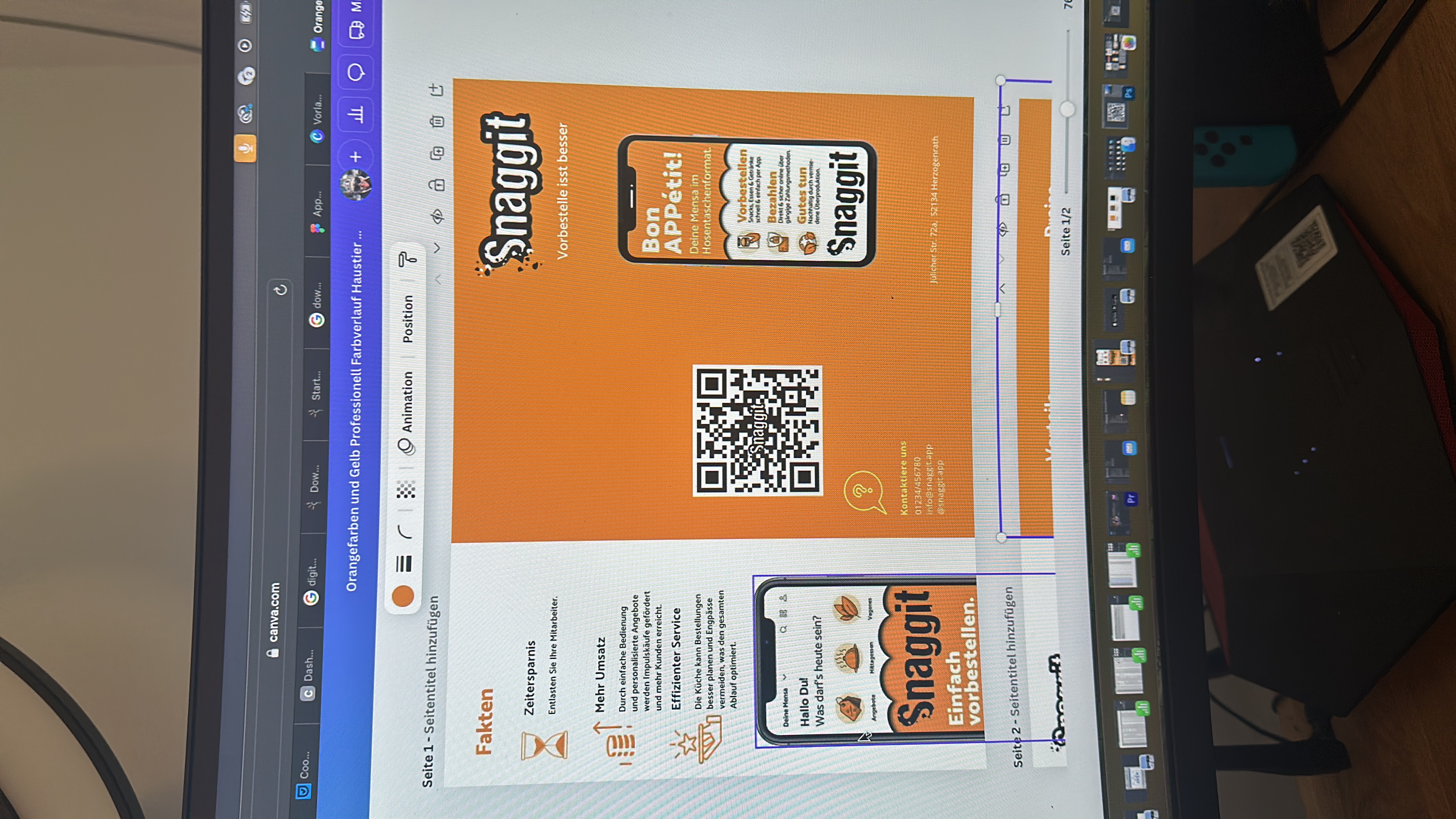
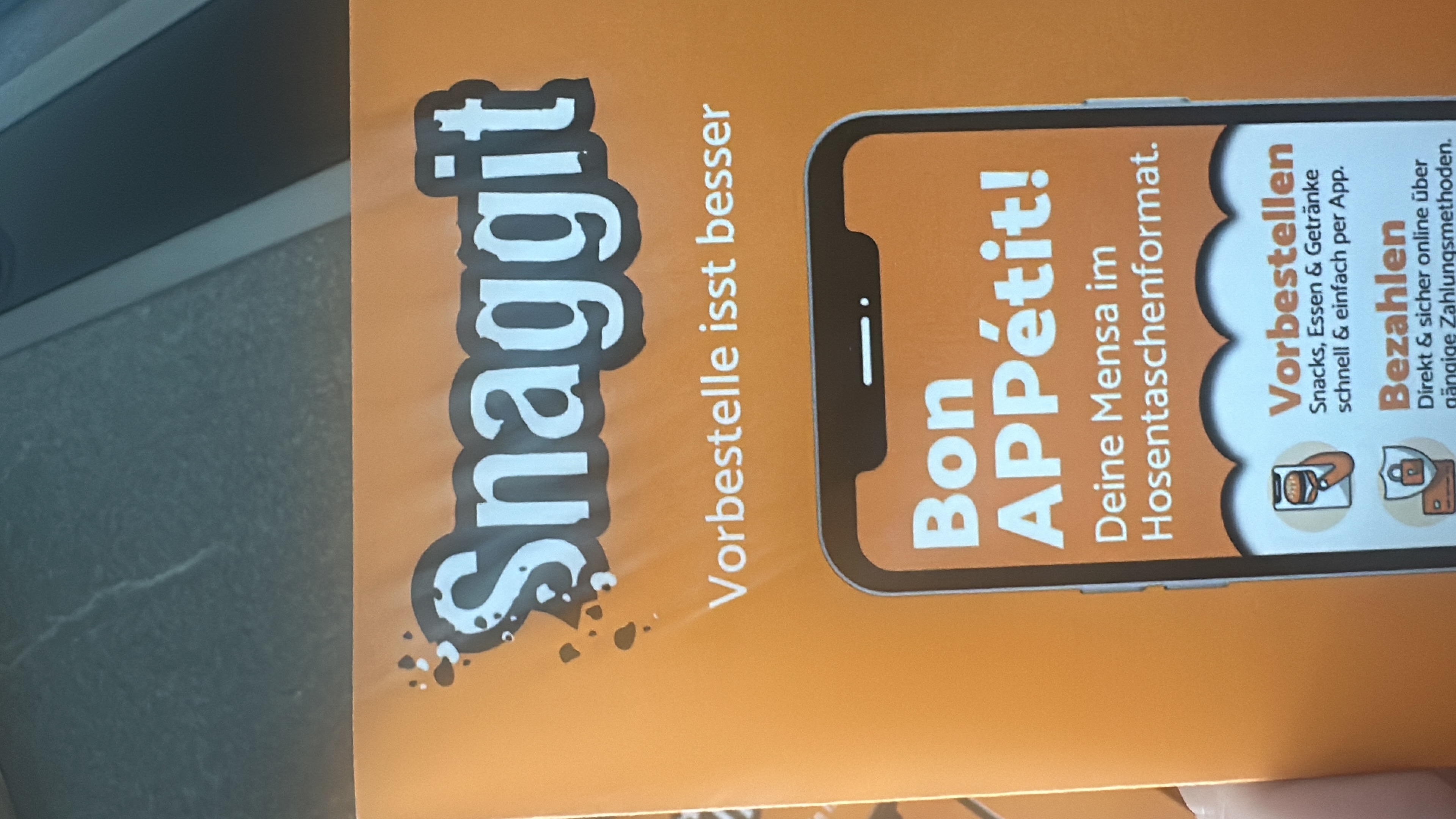
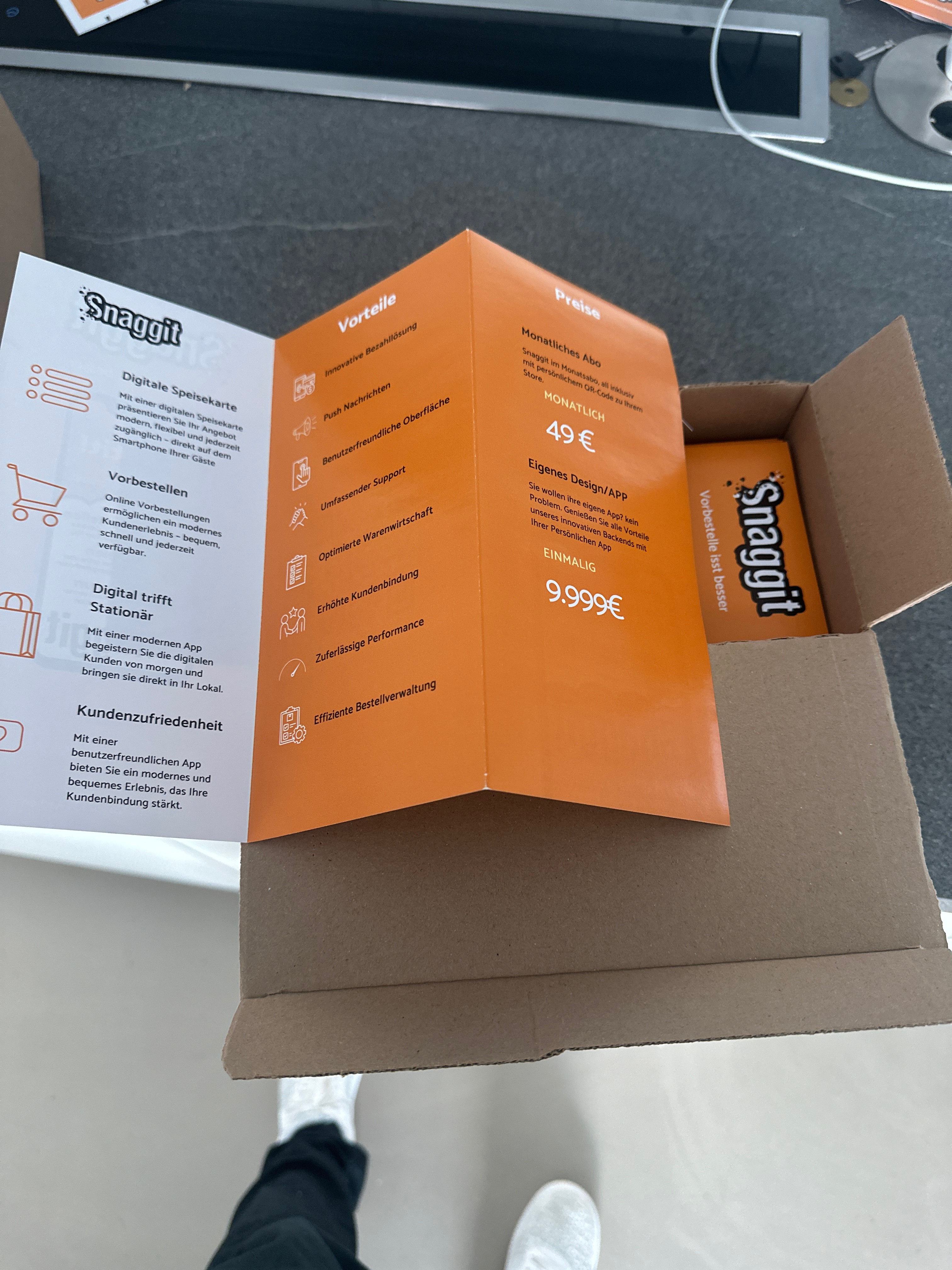
Almost, anyway. Flyers were designed. QR codes were created. Discount campaigns were planned. Snaggit got slogans and marketing materials. And one day, our freshly printed flyers arrived. Open the box. Take out a flyer. Looks good.
Logo is right. Orange is right. Layout is right. Text… Hang on.
“Vorbestelle isst besser.”
Not:
“Vorbestellen ist besser.” — “Pre-ordering is better.” No.
“Vorbestelle isst besser.”
A missing “n”. And “isst” means “eats” rather than “is”. Naturally, we only noticed once they had been printed. At least Snaggit was about food. So it was not entirely off-topic.

From trade fair visitor to exhibitor.
Right at the start, we went to industry trade fairs as visitors ourselves. Looking. Listening. Making contacts. Understanding how the market works. And probably dreaming a little about being there with Snaggit ourselves one day.
Some time later, that day actually came.
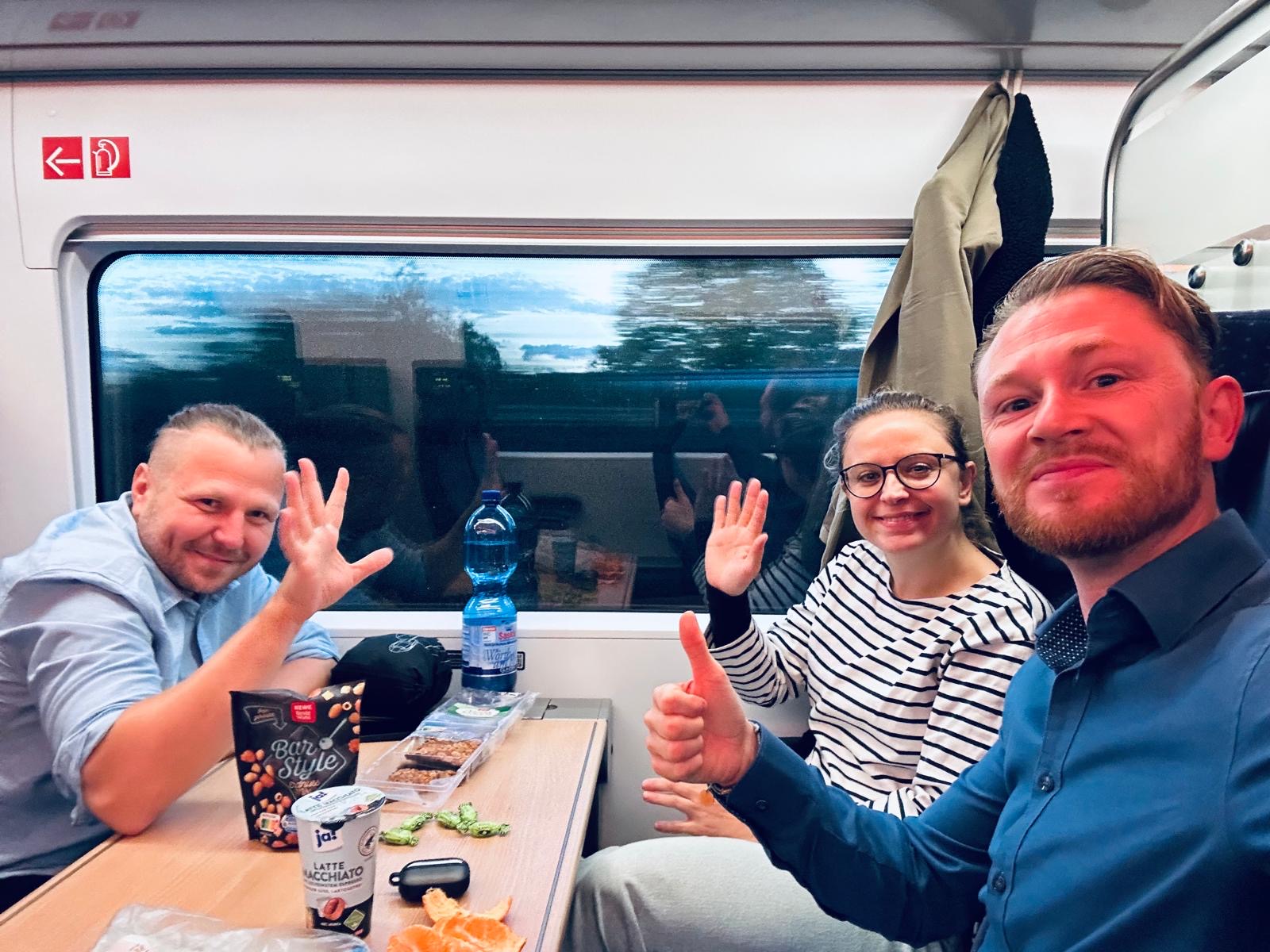
IBA.
Our own stand. Our own shirts. Our own flyers. Roll-up banners. A startup pitch. Snaggit at an international industry trade fair. And, of course:
Klümpchen. Our local boiled sweets. After all those years, it felt like a real milestone. We were there. With our own product. With our own stand. And with an app that… ...
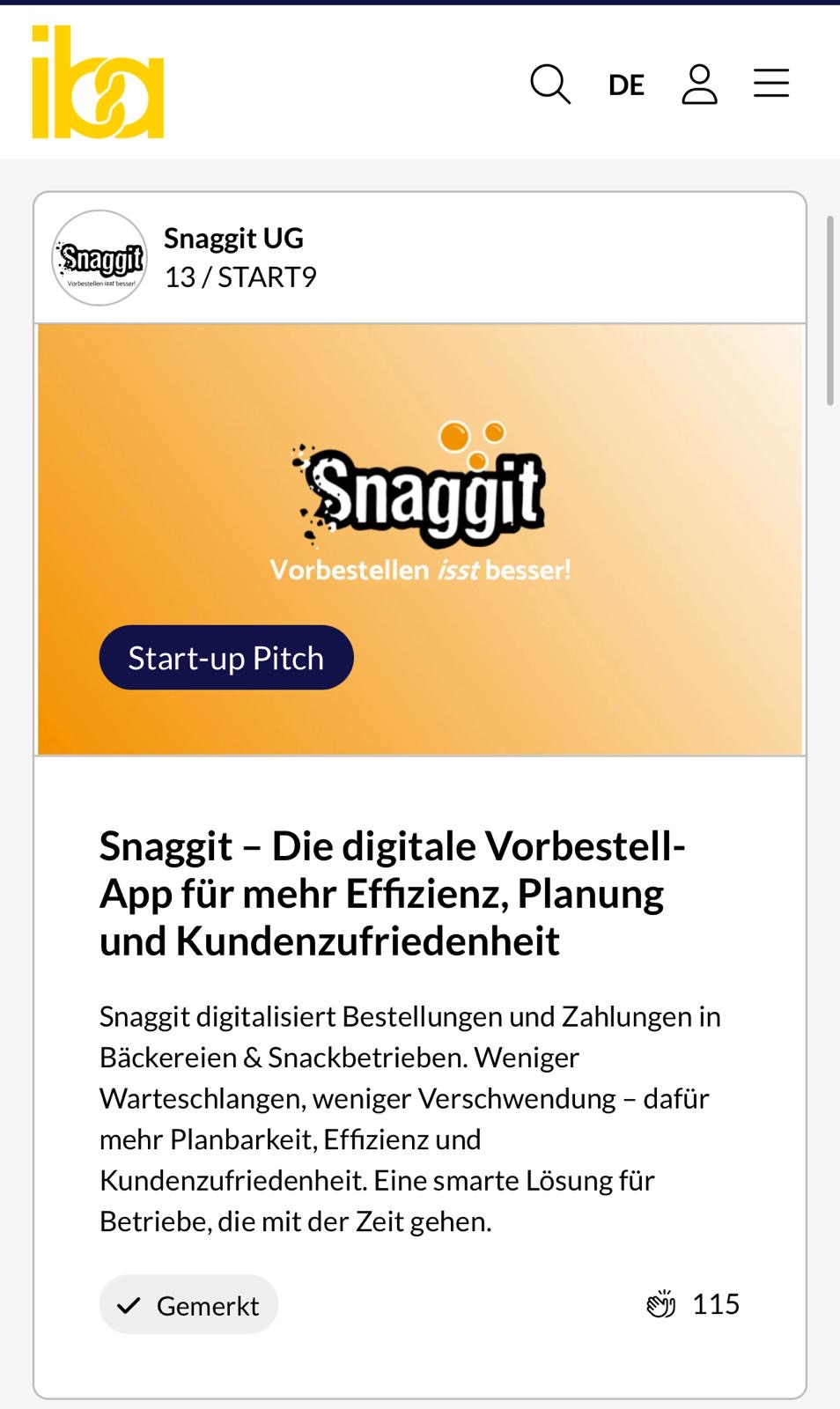
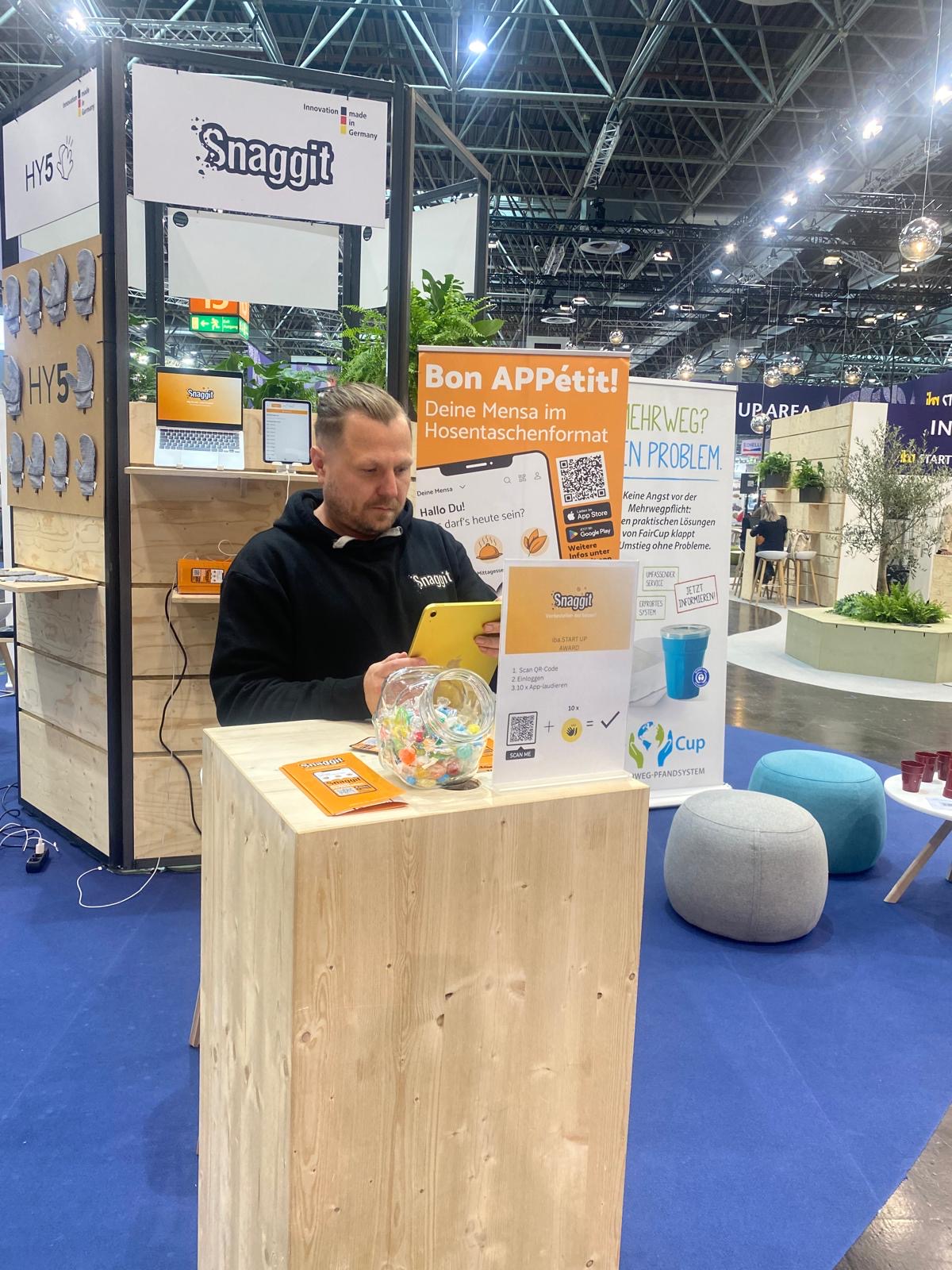
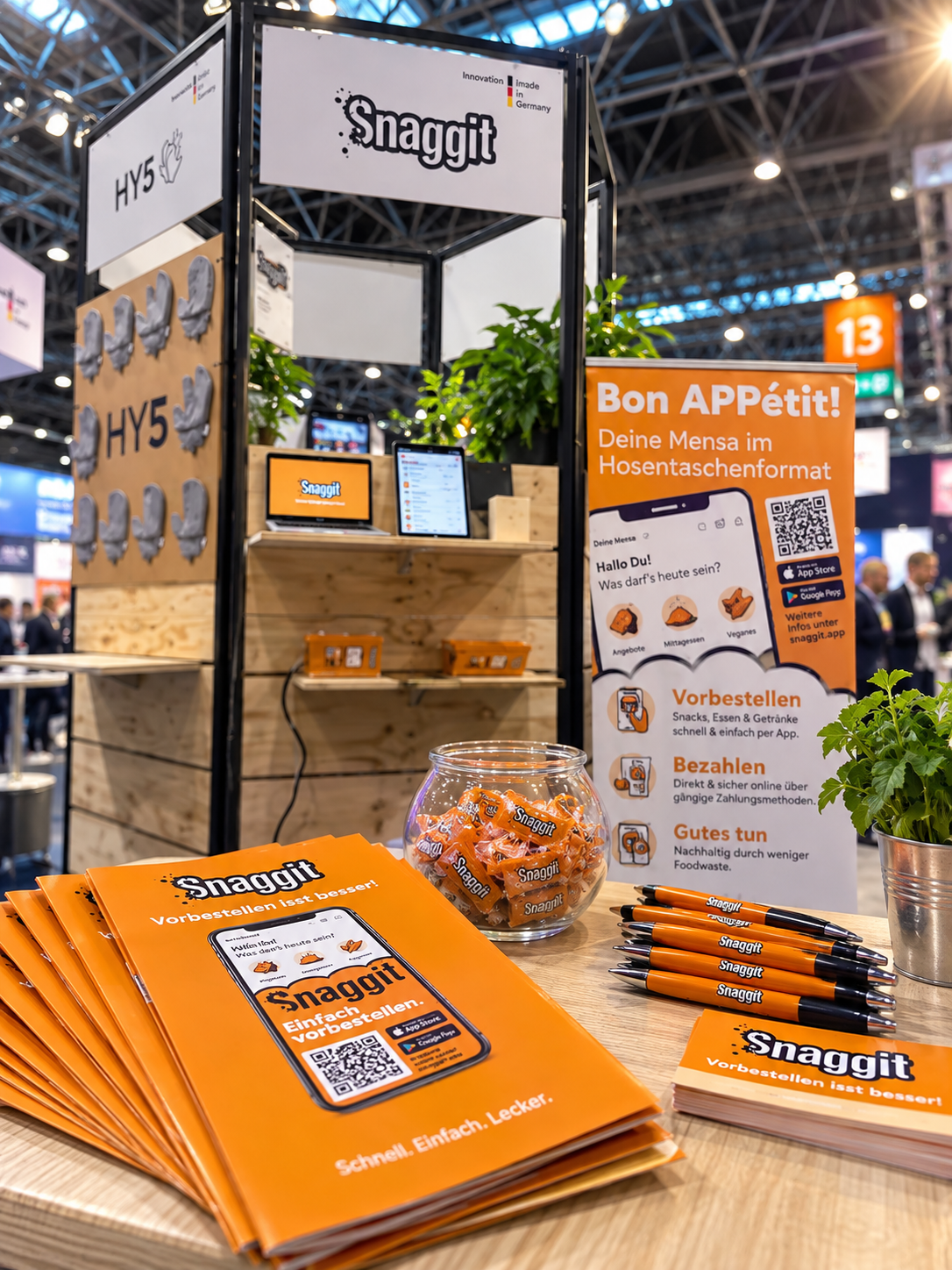
IBA · Original footage
We were there.
Two people present a smartphone and flyers at the Snaggit stand. The camera moves through the exhibition hall and back to the stand. Visible: the Snaggit logo, a roll-up banner and the exhibition counter.
…did not work.
Right at the start of the fair, of all times. An update had been quickly uploaded the day before. Let’s put it this way:
The update and our idea of a successful opening day were not entirely compatible. Luckily, the fair was in Germany. We could simply blame a surprisingly large share of the problems on the internet. ;-)
The sweets worked.
Right from the start. Completely stable. No bugs. No server problems. No updates. Perhaps our most reliable product that morning. But despite all the difficulties, IBA gave us exactly what we had come for:
We had conversations. Got feedback. Made contacts. And met people who understood the problem we wanted to solve with Snaggit. For us, the fair was a success. Our developer apparently saw it differently. Shortly afterwards, he quit.
And eventually stopped communicating altogether.
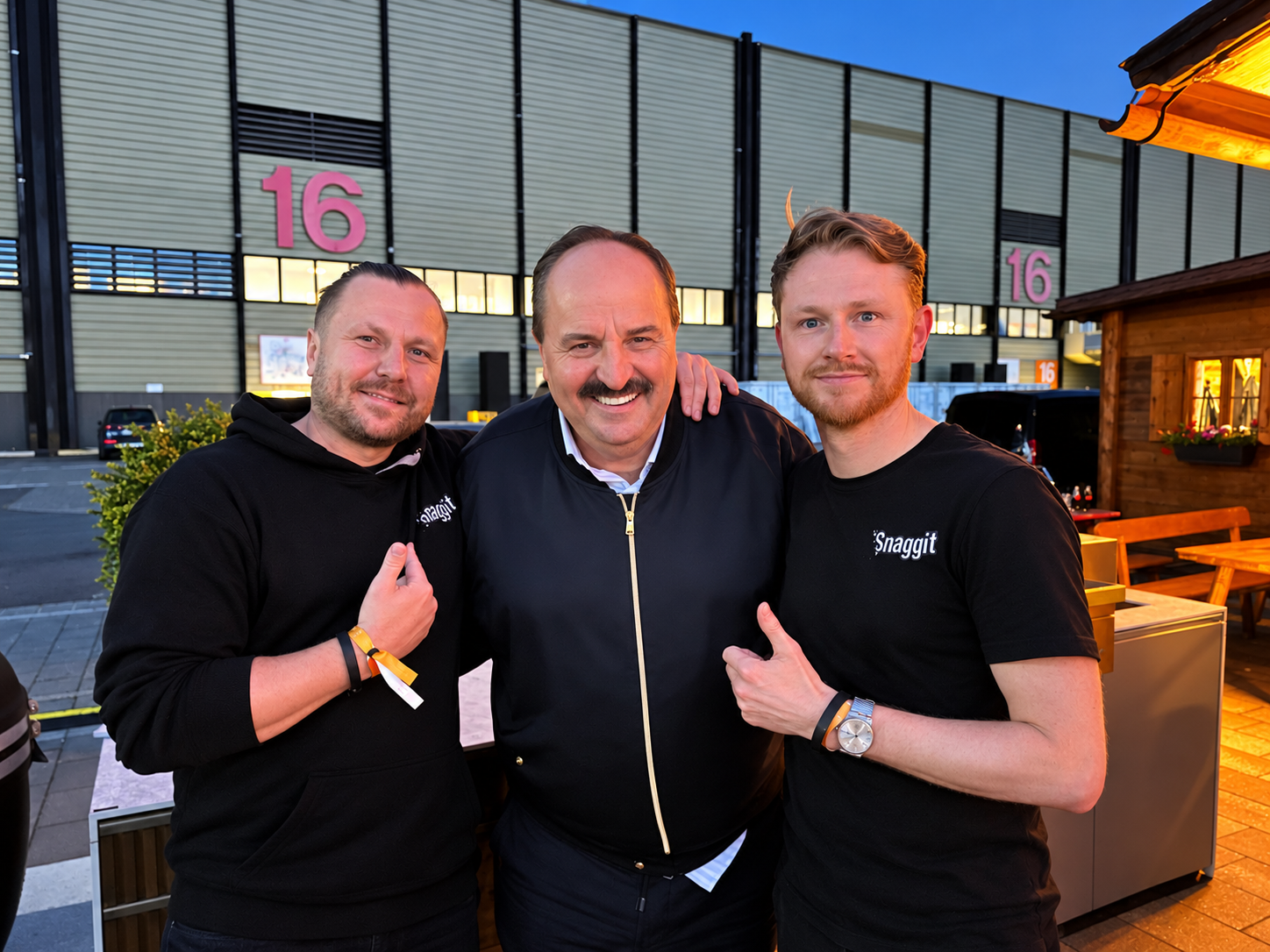
Another one gone.
The timing could have been better. Because the next trade fair was already in the calendar:
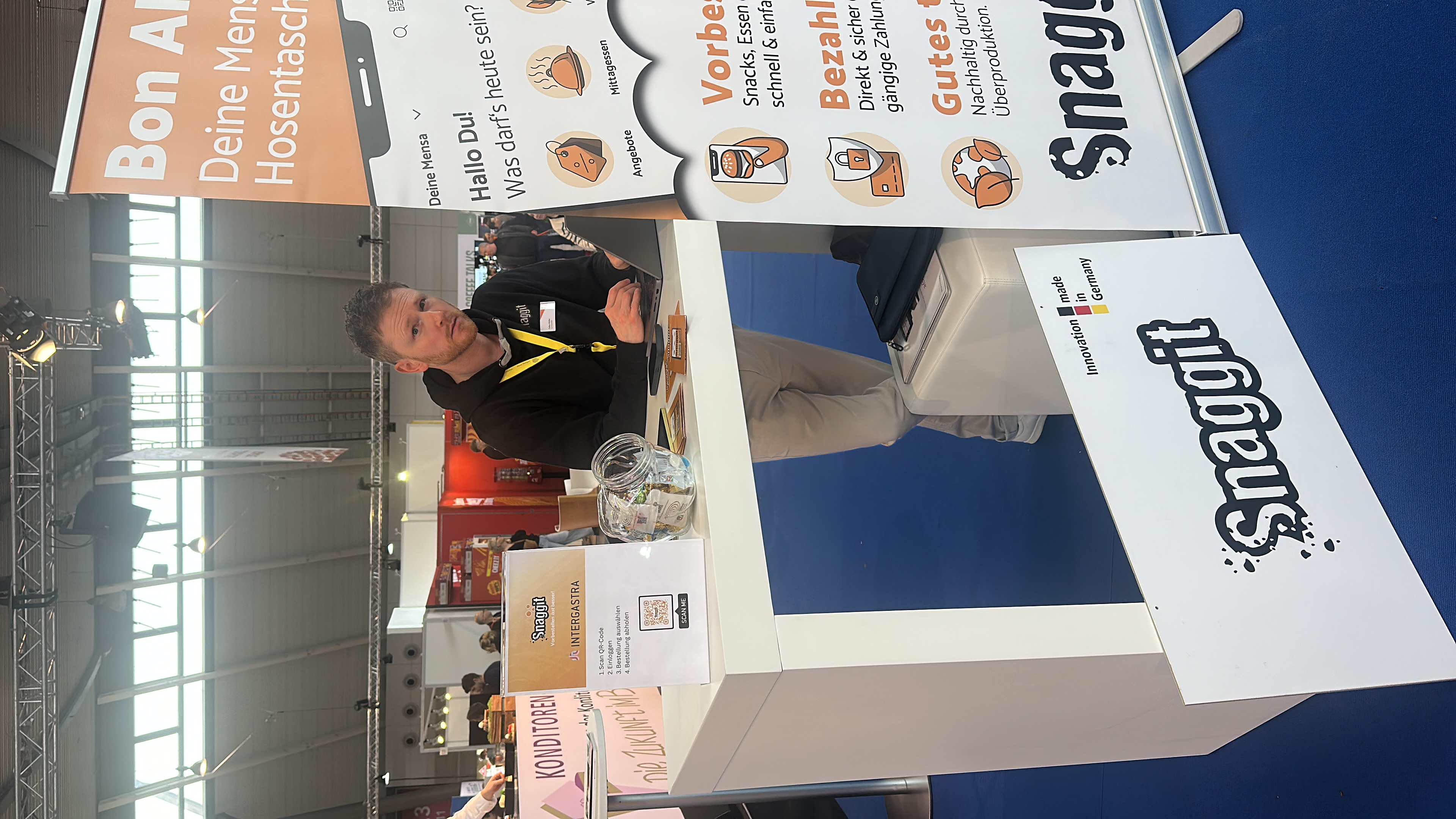
Intergastra.
So what do we do? Cancel? Stay home? Wait for another developer? No. We had an external team put together another prototype at breakneck speed. And went to Stuttgart. There we were again. Talking about Snaggit again. Having great conversations again.
And coming home with the same conclusion again:
We keep going.
At that same fair, we also came across a very familiar-looking idea, now being presented under a different name. Apparently, those experiences are part of being an entrepreneur too. But afterwards, something else became increasingly clear to me:
I no longer wanted Snaggit’s future to depend on whether some developer would still feel like working on our project tomorrow.
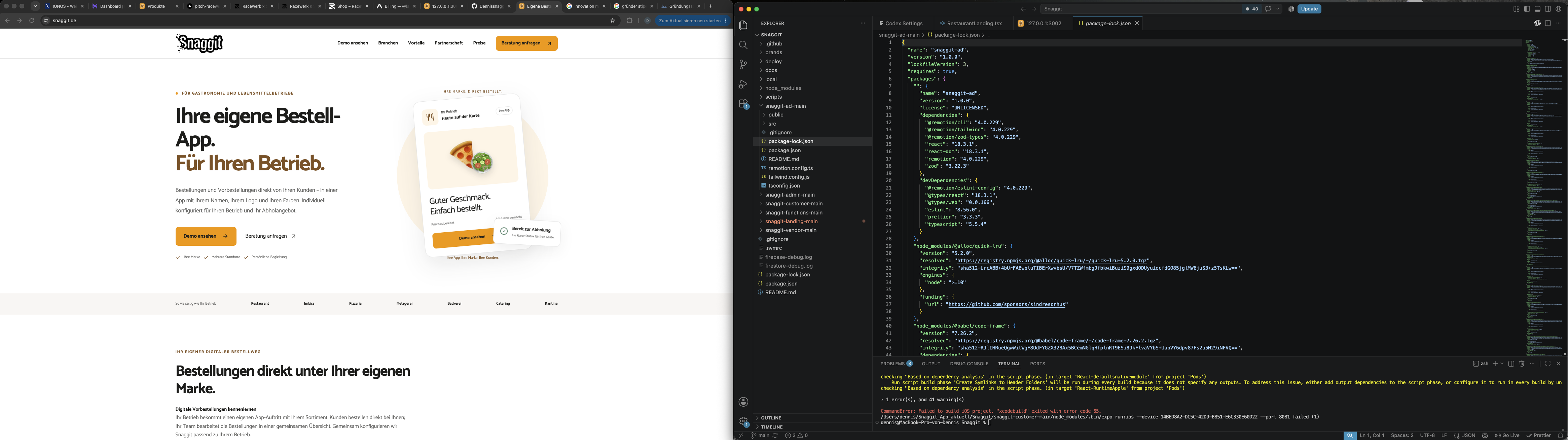
Then I’ll do it myself.
I already had some basic programming knowledge. But now I wanted to really understand it. Not just enough to explain to a developer what I needed. Enough to build it myself. So I learnt. Tried things. Built things. Scrapped things.
Probably swore quite a lot. Kept learning. And eventually deepened my knowledge at the Developer Academy too. For the first time, I could do more than explain Snaggit.
I could build it myself.
And this time, I had something you cannot learn from a tutorial:
the experience of the past few years.
So, once more. From the beginning.
But not really from the beginning this time. This time, I knew what our customers needed. I knew how things worked in the canteen. I knew the problems with ordering. I knew the operator’s perspective. I knew the users’ perspective.
I knew the technical dead ends. I knew the flaws in the old systems. And above all, I knew:
Snaggit must never be a rigid system.
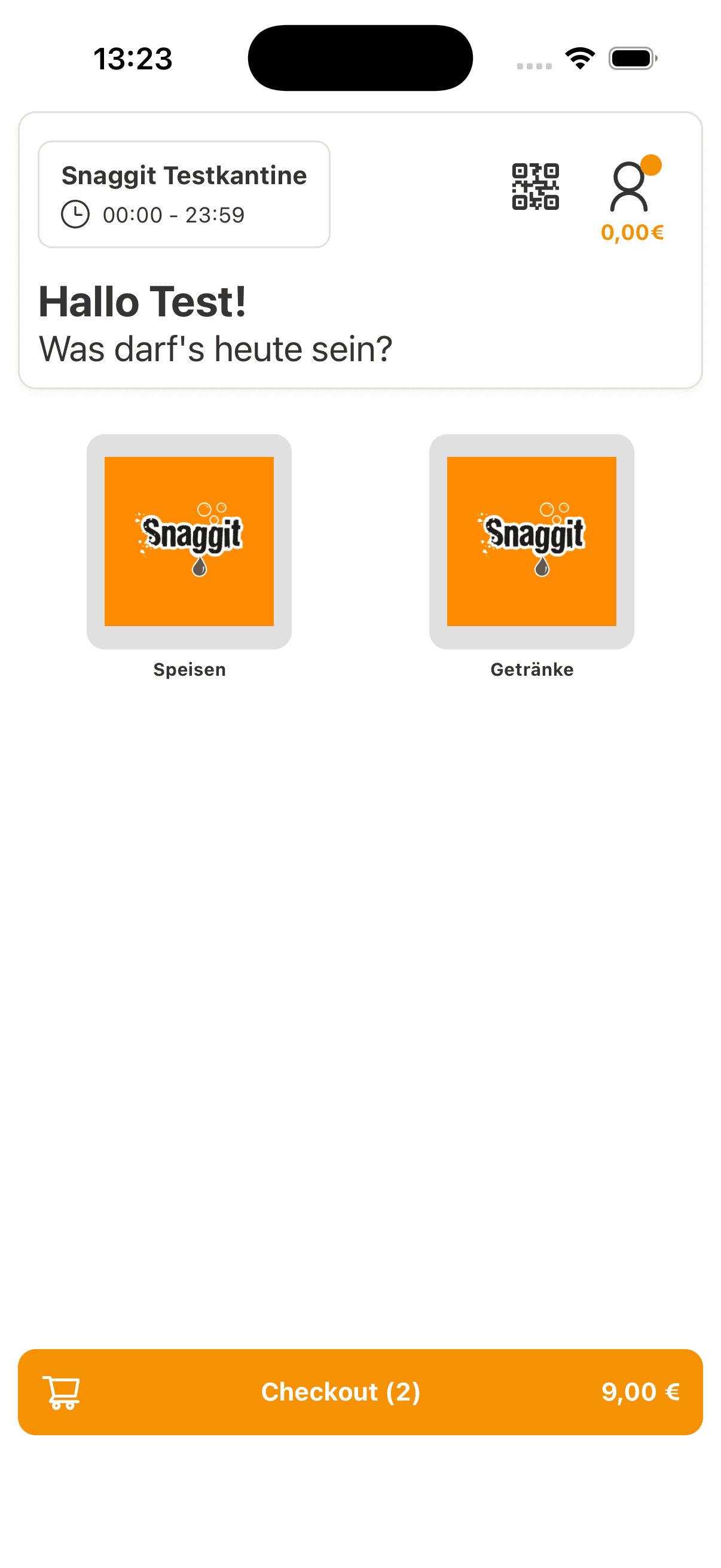
So Snaggit was rebuilt. Modular. Flexible. As a white-label solution. Adaptable to different businesses and requirements. Built on more than a theoretical product idea. Built on:
real businesses. real orders. real customers. real mistakes. And a hell of a lot of lessons learnt.
Snaggit today.
What began as:
“We’ll quickly build you an app.” has grown over the years into a modular digital platform that we use in our own daily work and keep developing together with our partners. Today, we can offer businesses a solution where we have already made many of the mistakes they no longer need to make themselves.
And perhaps that is one of our greatest strengths. I now know how important good partners are. I know how it feels when technology does not work. I know how it feels when suddenly nobody is there to answer. I know how it feels to invest money in something without knowing whether it will work in the end.
And I know how much more valuable a reliable partner can be than a feature on a price list. That also shapes the way we want to work with our customers today. We do not want to simply sell software and disappear afterwards.
We want to understand how a business works. Solve problems together. And be there when something does not go to plan. Because there is one thing this journey has definitely taught me:
Snaggit today
Your app. Your brand. Your customers.
Try today’s appWe entrepreneurs stick together.
Starting a business does not mean always winning. It also means:
Having ideas. Making decisions. Making mistakes. Trusting people. Sometimes being let down. Finding partners. Losing partners. Investing money. Losing money. Falling down. Learning. And starting again. Today, I have enormous respect for anyone who takes that path.
Because from the outside, you usually only see the end result of a business. Not the evenings that came before. Not the wrong decisions. Not the bills. Not the doubts. Not the bugs. And certainly not the flyers with the missing “n”.
Was any of this planned?
Absolutely not.
Would I do some things differently today?
Definitely.
Would I give up?
Never.
Because if this story has taught me anything, it is this:
Giving up is not an option.
The only things I’ll be dropping off are letters.
At the post office.
— Dennis Falkner
Founder of Snaggit
The next story
And now?
Snaggit is ready for the stories of other entrepreneurs.
Perhaps yours.
Get to know Snaggit